Fully AI-generated: this translation, culture and language-learning page was made automatically by AAAT (audio-auto-annotate-translate). AI wrote the transcription, readings, translation, word and culture notes, and spoke the voices; any of it may be wrong.
| Japanese | English |
|---|---|
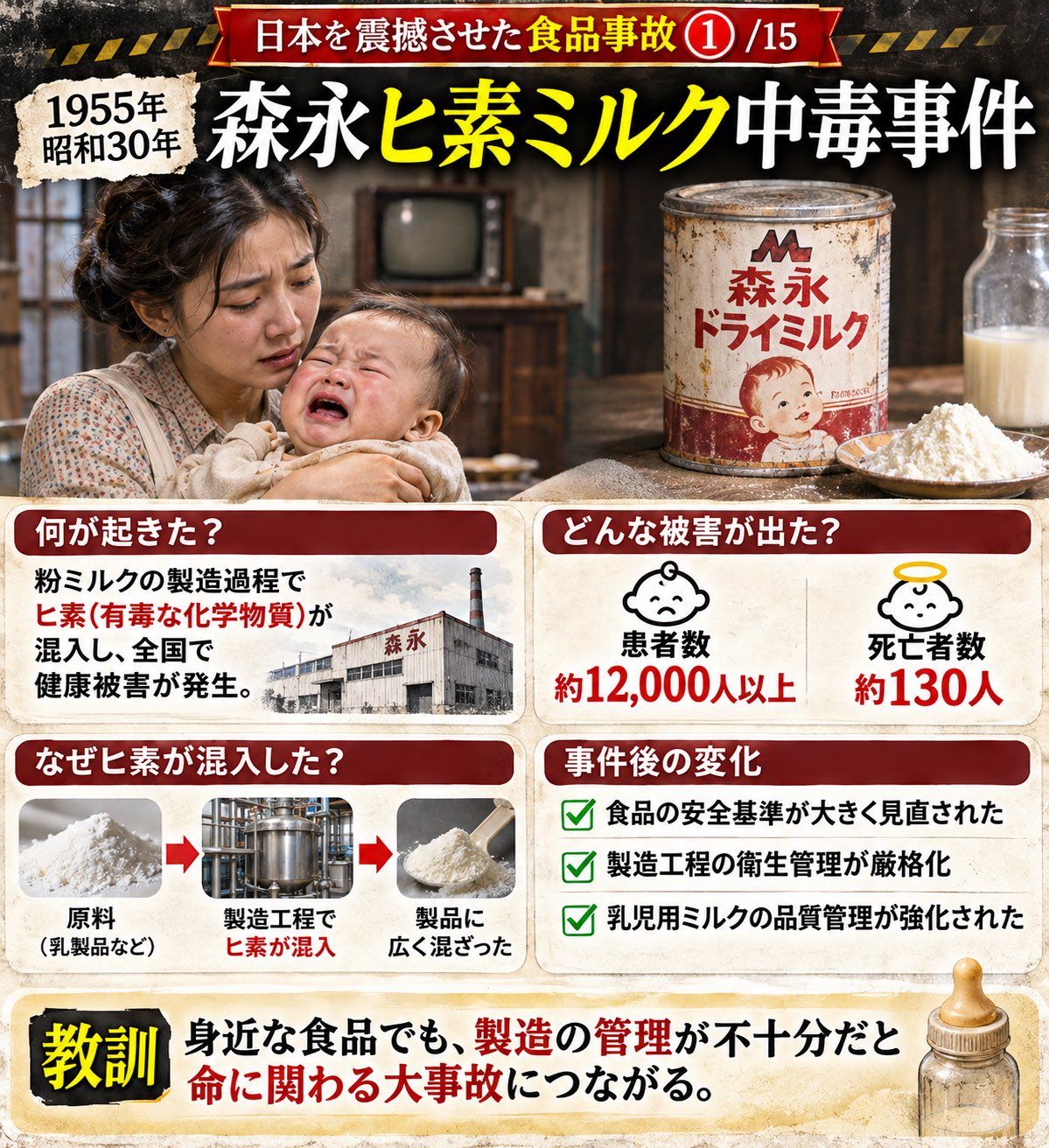
| 日本を震撼させた食品事故①/15 | Food disasters that shook Japan: No. 1 of 15 |
| 1955年 | 1955 |
| 昭和30年 | Shōwa 30 |
| 森永ヒ素ミルク中毒事件 | The Morinaga Arsenic Milk Poisoning Case |
| 森永 | Morinaga |
| ドライミルク | Dry Milk |
| 何が起きた? | What happened? |
| 粉ミルクの製造過程で | During the making of powdered milk, |
| ヒ素(有毒な化学物質)が | arsenic (a toxic chemical) |
| 混入し、全国で | got mixed in, and across the country |
| 健康被害が発生。 | people's health was harmed. |
| 森永 | Morinaga |
| どんな被害が出た? | What harm was done? |
| 患者数 | People poisoned |
| 約12,000人以上 | Over 12,000 |
| 死亡者数 | Deaths |
| 約130人 | About 130 |
| なぜヒ素が混入した? | Why did arsenic get in? |
| 原料 | Raw materials |
| (乳製品など) | (dairy products, etc.) |
| 製造工程で | In manufacturing, |
| ヒ素が混入 | arsenic got mixed in |
| 製品に | Into the products, |
| 広く混ざった | it got widely mixed |
| 事件後の変化 | What changed afterward |
| 食品の安全基準が大きく見直された | Food safety standards were overhauled. |
| 製造工程の衛生管理が厳格化 | Hygiene control in manufacturing was tightened. |
| 乳児用ミルクの品質管理が強化された | Quality control of infant formula was strengthened. |
| 教訓 | Lesson |
| 身近な食品でも、製造の管理が不十分だと | Even with everyday food, if manufacturing isn't properly controlled, |
| 命に関わる大事故につながる。 | it can lead to a disaster that costs lives. |
Fully AI-generated: this translation, culture and language-learning page was made automatically by AAAT (audio-auto-annotate-translate). AI wrote the transcription, readings, translation, word and culture notes, and spoke the voices; any of it may be wrong.
| Japanese | English |
|---|---|
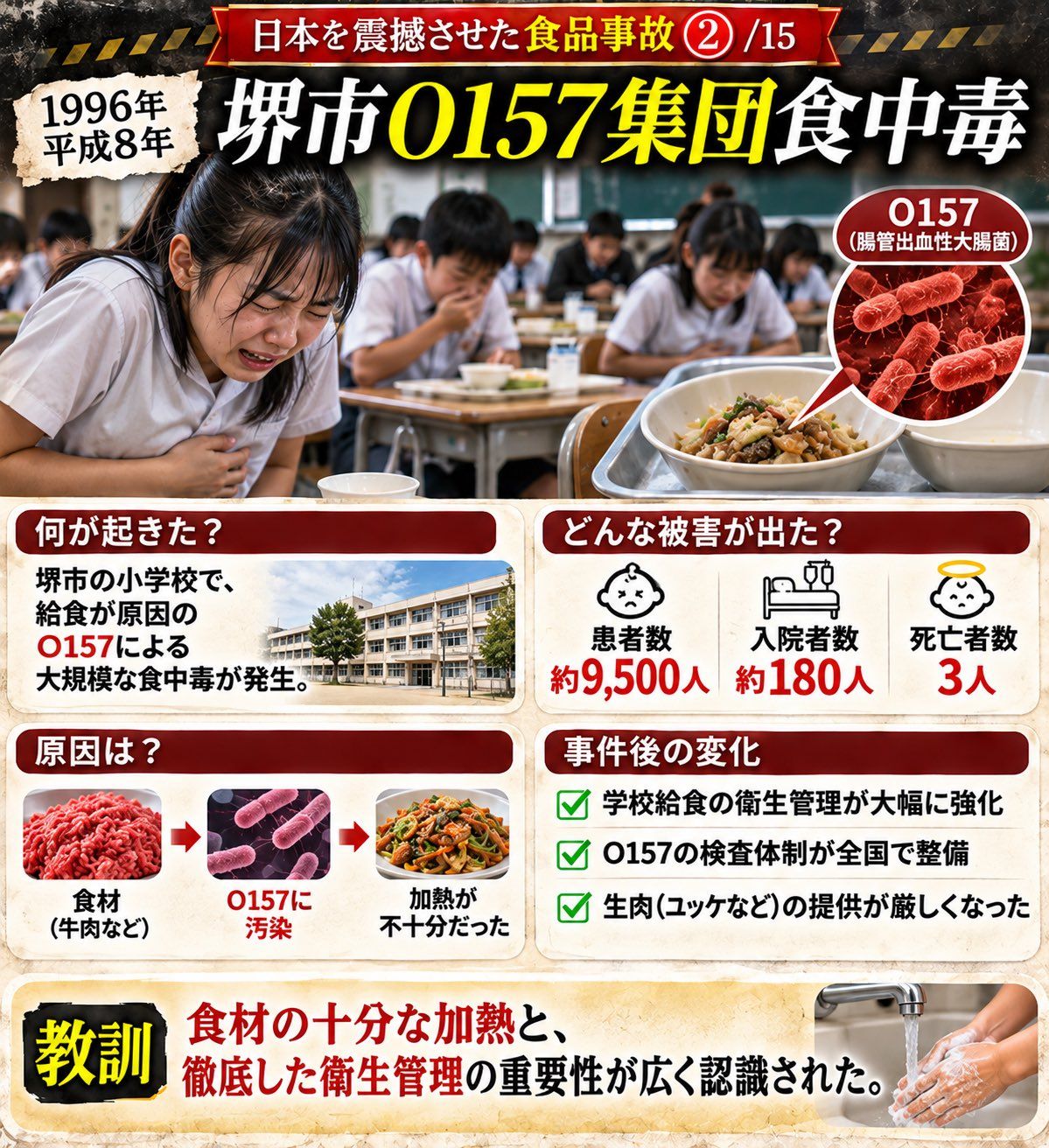
| 日本を震撼させた食品事故②/15 | Food disasters that shook Japan, No. 2 of 15 |
| 1996年 | 1996 |
| 平成8年 | Heisei 8 |
| 堺市O157集団食中毒 | The Sakai O157 Mass Food Poisoning |
| O157 | O157 |
| (腸管出血性大腸菌) | (enterohemorrhagic E. coli) |
| 何が起きた? | What happened? |
| 堺市の小学校で、 | At elementary schools in Sakai, |
| 給食が原因の | with school lunches to blame, |
| O157による | O157 caused |
| 大規模な食中毒が発生。 | a huge outbreak of food poisoning. |
| どんな被害が出た? | What was the toll? |
| 患者数 | Patients |
| 約9,500人 | about 9,500 |
| 入院者数 | Hospitalized |
| 約180人 | about 180 |
| 死亡者数 | Deaths |
| 3人 | 3 |
| 原因は? | What caused it? |
| 食材 | Ingredients |
| (牛肉など) | (beef, etc.) |
| O157に | with O157 |
| 汚染 | contaminated |
| 加熱が | The cooking |
| 不十分だった | wasn't thorough enough |
| 事件後の変化 | What changed afterward |
| 学校給食の衛生管理が大幅に強化 | Hygiene control in school lunches was greatly tightened |
| O157の検査体制が全国で整備 | O157 testing systems were set up nationwide |
| 生肉(ユッケなど)の提供が厳しくなった | Serving raw meat (yukke and the like) became strictly regulated |
| 教訓 | The lesson |
| 食材の十分な加熱と、 | Thorough cooking of ingredients and |
| 徹底した衛生管理の重要性が広く認識された。 | rigorous hygiene control came to be widely recognized as essential. |
Fully AI-generated: this translation, culture and language-learning page was made automatically by AAAT (audio-auto-annotate-translate). AI wrote the transcription, readings, translation, word and culture notes, and spoke the voices; any of it may be wrong.
| Japanese | English |
|---|---|
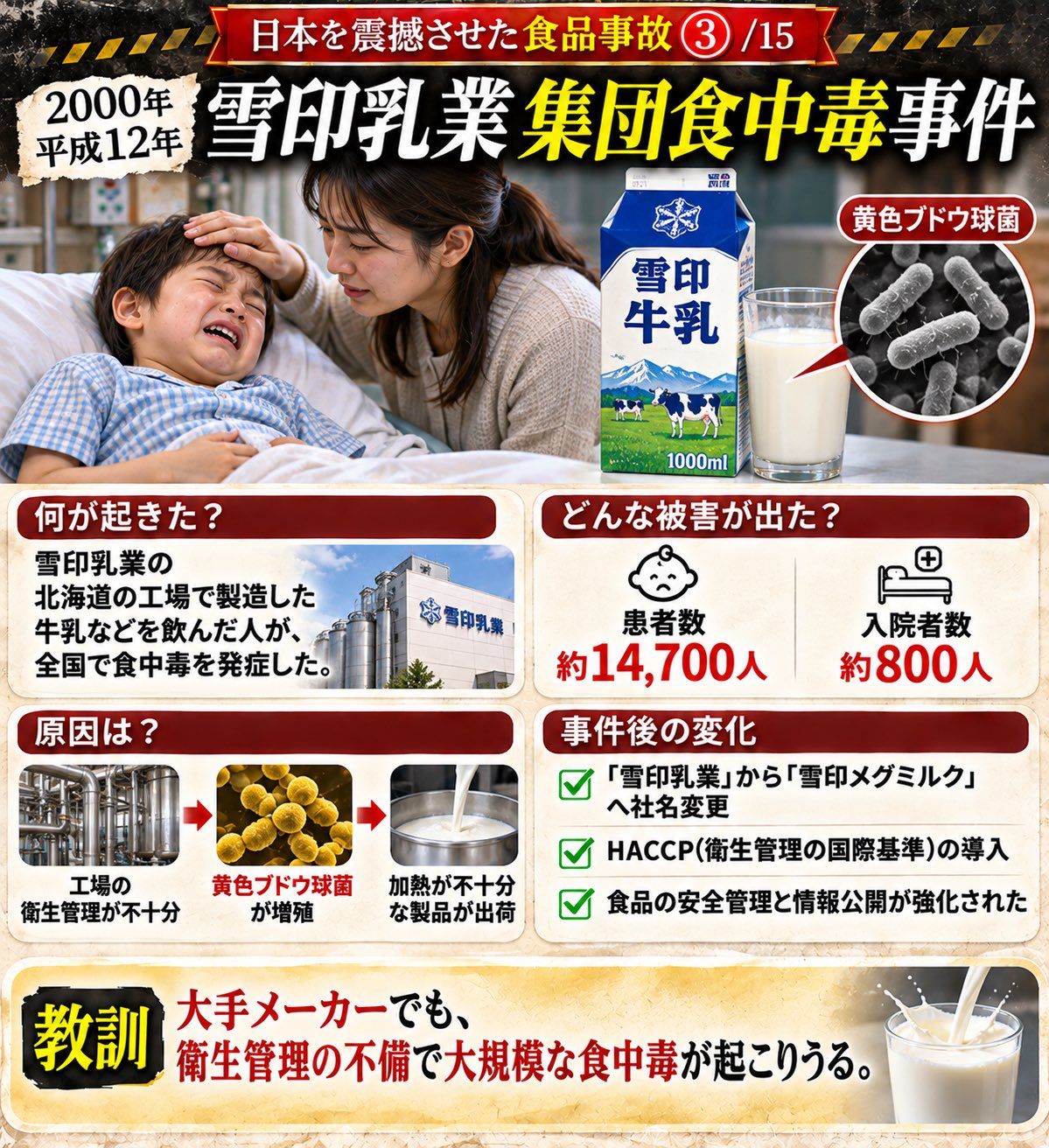
| 日本を震撼させた食品事故③/15 | Food accidents that shook Japan, No. 3 of 15 |
| 2000年 | 2000 |
| 平成12年 | Heisei 12 |
| 雪印乳業集団食中毒事件 | The Snow Brand Milk mass food poisoning case |
| 雪印 | Snow Brand |
| 牛乳 | Milk |
| 1000ml | 1000 ml |
| 黄色ブドウ球菌 | Staphylococcus aureus (staph) |
| 何が起きた? | What happened? |
| 雪印乳業の | Snow Brand Milk Products' |
| 北海道の工場で製造した | Hokkaido factory made milk and other products; |
| 牛乳などを飲んだ人が、 | the people who drank them |
| 全国で食中毒を発症した。 | fell ill with food poisoning all over the country. |
| 雪印乳業 | Snow Brand Milk Products |
| どんな被害が出た? | What harm was done? |
| 患者数 | People affected |
| 約14,700人 | about 14,700 |
| 入院者数 | Hospitalized |
| 約800人 | about 800 |
| 原因は? | What caused it? |
| 工場の | The factory's |
| 衛生管理が不十分 | hygiene control was inadequate |
| 黄色ブドウ球菌 | Staph bacteria |
| が増殖 | multiplied |
| 加熱が不十分 | Insufficiently heated |
| な製品が出荷 | products were shipped |
| 事件後の変化 | Changes after the incident |
| 「雪印乳業」から「雪印メグミルク」 | From "Snow Brand Milk Products" to "Snow Brand Megmilk": |
| へ社名変更 | a change of company name |
| HACCP(衛生管理の国際基準)の導入 | Adoption of HACCP (an international standard for hygiene control) |
| 食品の安全管理と情報公開が強化された | Food safety control and information disclosure were strengthened |
| 教訓 | The lesson |
| 大手メーカーでも、 | Even at a major manufacturer, |
| 衛生管理の不備で大規模な食中毒が起こりうる。 | lapses in hygiene control can cause mass food poisoning. |
Fully AI-generated: this translation, culture and language-learning page was made automatically by AAAT (audio-auto-annotate-translate). AI wrote the transcription, readings, translation, word and culture notes, and spoke the voices; any of it may be wrong.
| Japanese | English |
|---|---|
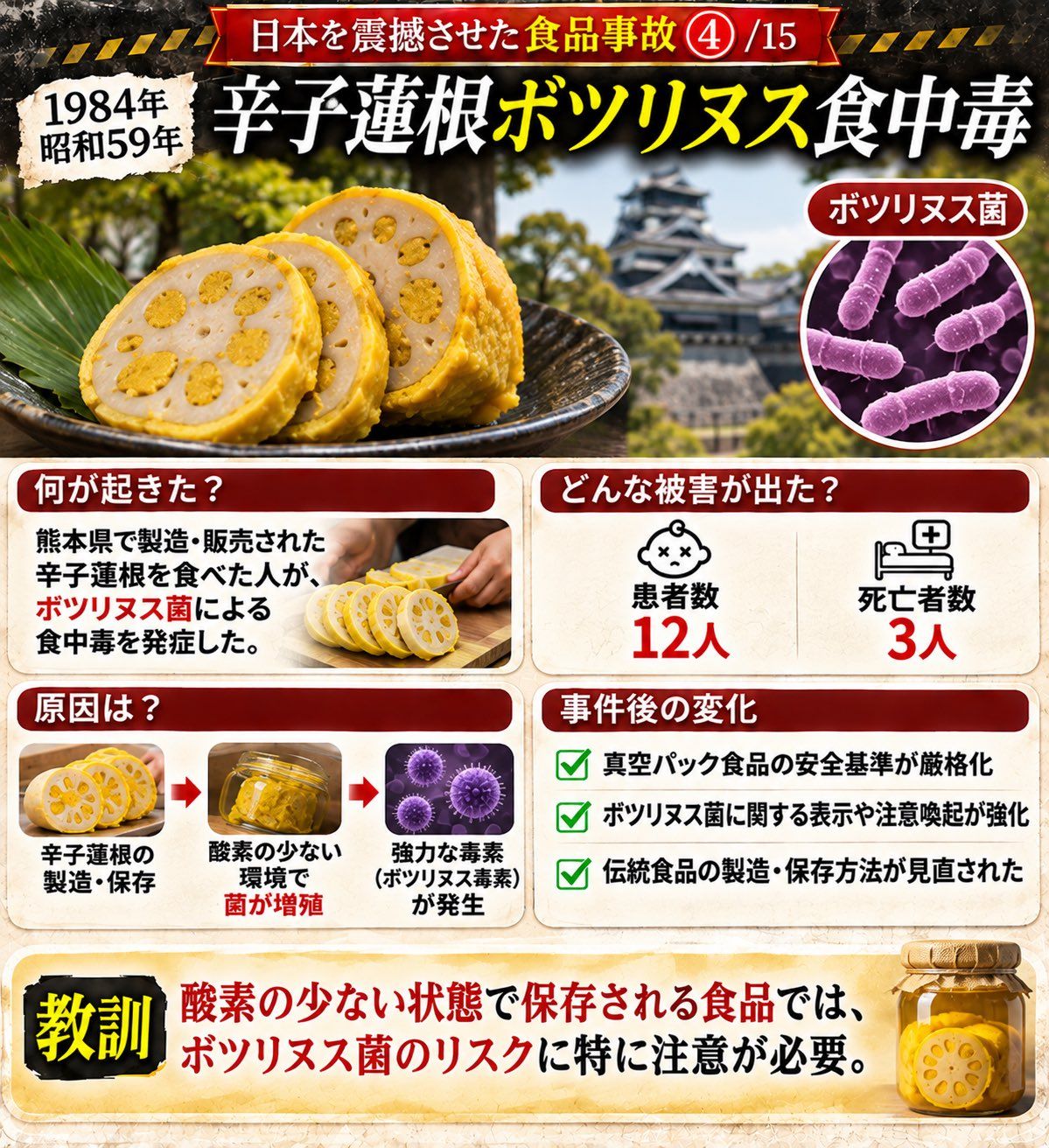
| 日本を震撼させた食品事故④/15 | Food disasters that shook Japan: No. 4 of 15 |
| 1984年 | 1984 |
| 昭和59年 | Shōwa 59 |
| 辛子蓮根ボツリヌス食中毒 | The karashi renkon botulism poisoning |
| ボツリヌス菌 | Botulinum bacteria |
| 何が起きた? | What happened? |
| 熊本県で製造・販売された | made and sold in Kumamoto Prefecture |
| 辛子蓮根を食べた人が、 | people who ate the karashi renkon |
| ボツリヌス菌による | caused by botulinum bacteria |
| 食中毒を発症した。 | came down with food poisoning. |
| どんな被害が出た? | What was the toll? |
| 患者数 | Number of patients |
| 12人 | 12 people |
| 死亡者数 | Number of deaths |
| 3人 | 3 people |
| 原因は? | The cause? |
| 辛子蓮根の | karashi renkon |
| 製造・保存 | made and stored |
| 酸素の少ない | low in oxygen |
| 環境で | in an environment |
| 菌が増殖 | the bacteria multiply |
| 強力な毒素 | a powerful toxin |
| (ボツリヌス毒素) | (botulinum toxin) |
| が発生 | is produced |
| 事件後の変化 | Changes after the incident |
| 真空パック食品の安全基準が厳格化 | Safety standards for vacuum-packed foods were tightened |
| ボツリヌス菌に関する表示や注意喚起が強化 | Labeling and warnings about botulinum bacteria were stepped up |
| 伝統食品の製造・保存方法が見直された | Ways of making and storing traditional foods were reviewed |
| 教訓 | The lesson |
| 酸素の少ない状態で保存される食品では、 | With foods stored in low-oxygen conditions, |
| ボツリヌス菌のリスクに特に注意が必要。 | you need to be especially careful about the risk of botulinum bacteria. |
Fully AI-generated: this translation, culture and language-learning page was made automatically by AAAT (audio-auto-annotate-translate). AI wrote the transcription, readings, translation, word and culture notes, and spoke the voices; any of it may be wrong.
| Japanese | English |
|---|---|
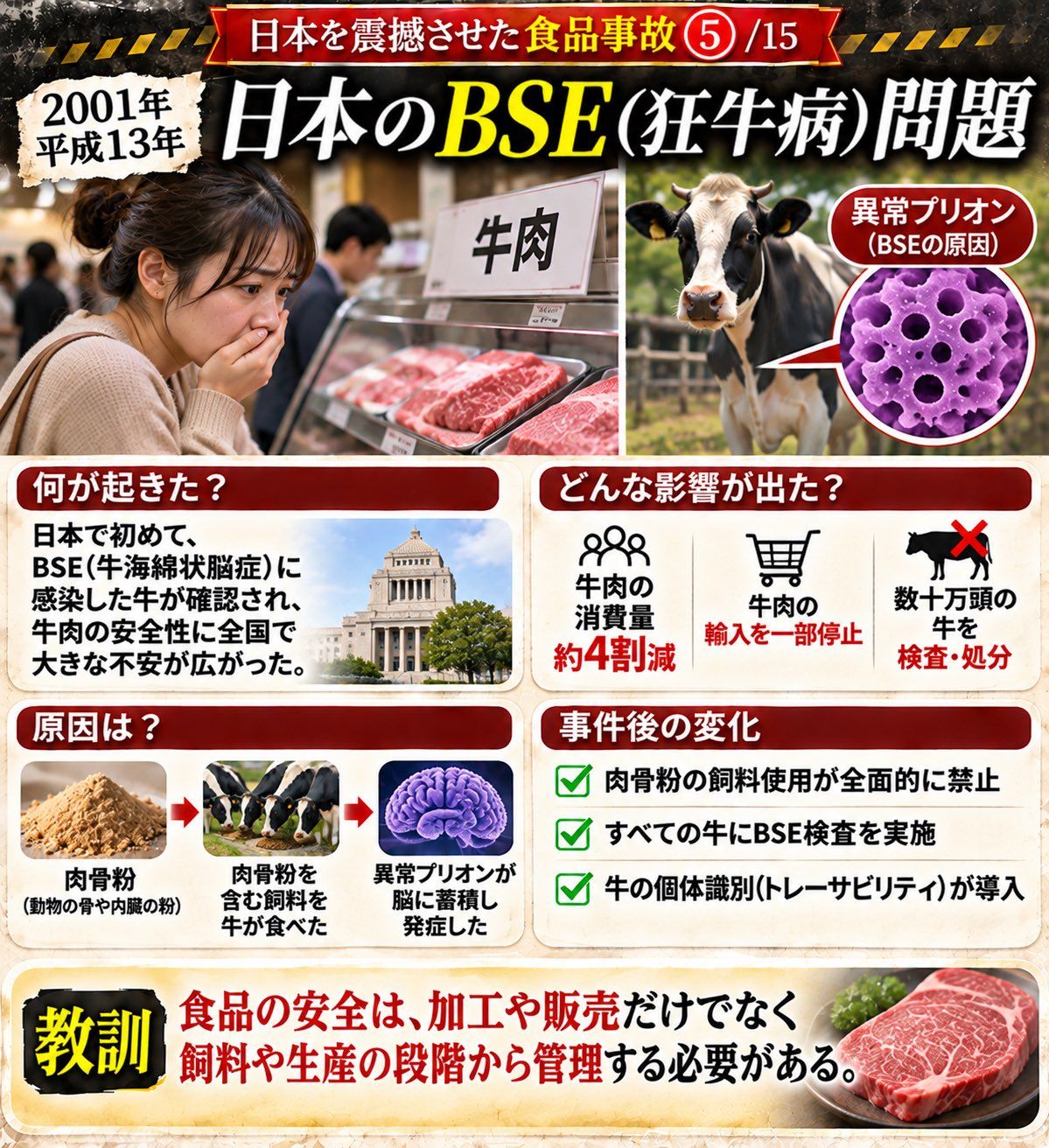
| 日本を震撼させた食品事故⑤/15 | Food disasters that shook Japan: No. 5 of 15 |
| 2001年 | 2001 |
| 平成13年 | Heisei 13 |
| 日本のBSE(狂牛病)問題 | Japan's BSE (mad cow disease) crisis |
| 牛肉 | Beef |
| 異常プリオン | Abnormal prions |
| (BSEの原因) | (the cause of BSE) |
| 何が起きた? | What happened? |
| 日本で初めて、 | For the first time in Japan, |
| BSE(牛海綿状脳症)に | a cow infected with BSE (bovine spongiform encephalopathy) |
| 感染した牛が確認され、 | was confirmed, and |
| 牛肉の安全性に全国で | over the safety of beef, all across the country |
| 大きな不安が広がった。 | great anxiety spread. |
| どんな影響が出た? | What were the effects? |
| 牛肉の | Beef |
| 消費量 | consumption |
| 約4割減 | down about 40% |
| 牛肉の | Beef |
| 輸入を一部停止 | imports partly suspended |
| 数十万頭の | Several hundred thousand |
| 牛を | cattle |
| 検査・処分 | tested and culled |
| 原因は? | What caused it? |
| 肉骨粉 | Meat-and-bone meal |
| (動物の骨や内臓の粉) | (a powder of animal bones and organs) |
| 肉骨粉を | Meat-and-bone meal |
| 含む飼料を | was in the feed |
| 牛が食べた | the cows ate |
| 異常プリオンが | Abnormal prions |
| 脳に蓄積し | built up in the brain, |
| 発症した | and the disease set in |
| 事件後の変化 | Changes after the incident |
| 肉骨粉の飼料使用が全面的に禁止 | Use of meat-and-bone meal in feed banned outright |
| すべての牛にBSE検査を実施 | BSE testing carried out on all cattle |
| 牛の個体識別(トレーサビリティ)が導入 | Individual identification of cattle (traceability) introduced |
| 教訓 | The lesson |
| 食品の安全は、加工や販売だけでなく | Food safety isn't just about processing and sales; |
| 飼料や生産の段階から管理する必要がある。 | it has to be managed from the feed and production stage on. |
Fully AI-generated: this translation, culture and language-learning page was made automatically by AAAT (audio-auto-annotate-translate). AI wrote the transcription, readings, translation, word and culture notes, and spoke the voices; any of it may be wrong.
| Japanese | English |
|---|---|
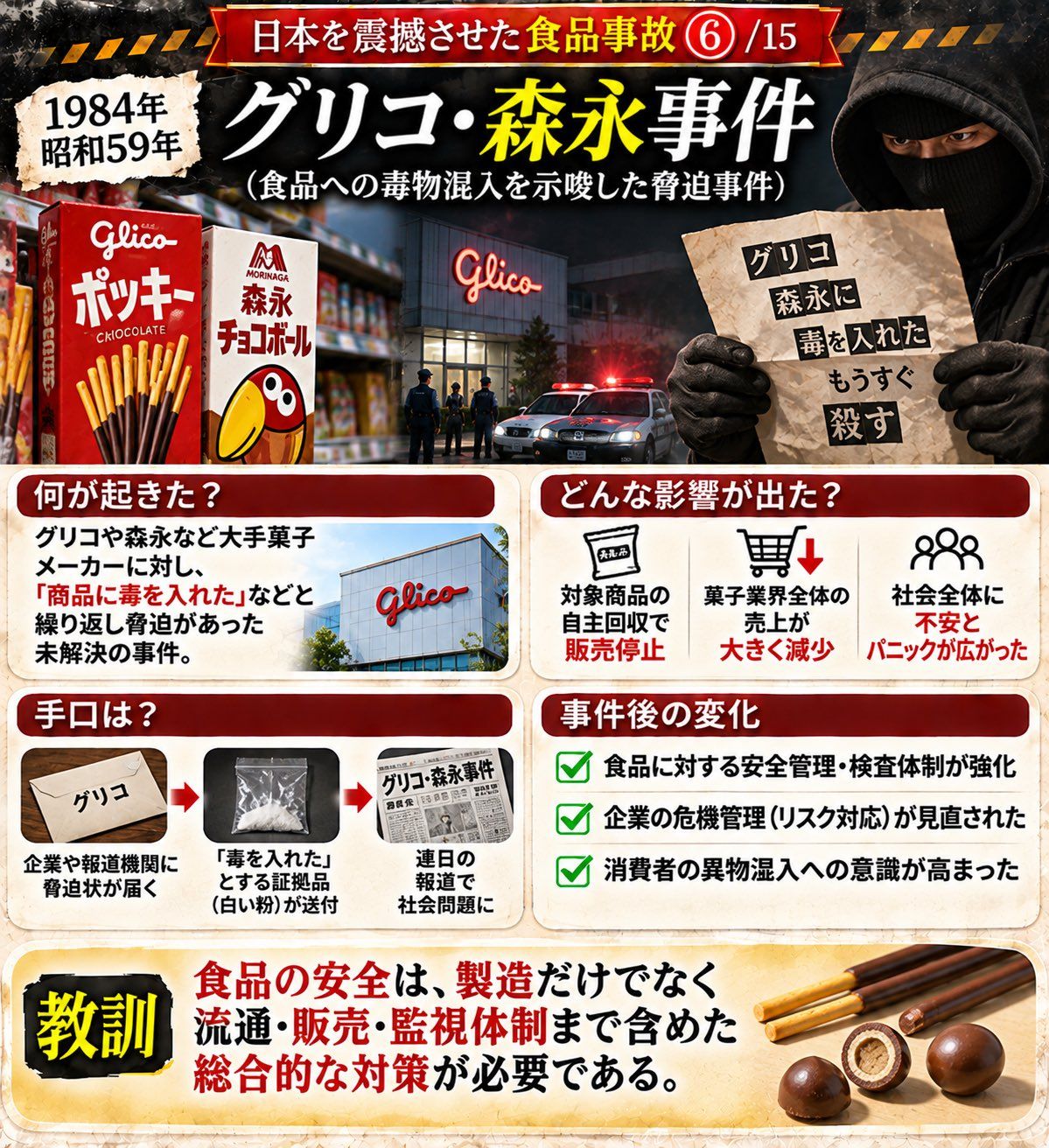
| 日本を震撼させた食品事故⑥/15 | Food incidents that shook Japan: No. 6 of 15 |
| 1984年 | 1984 |
| 昭和59年 | Shōwa 59 |
| グリコ・森永事件 | The Glico-Morinaga Case |
| (食品への毒物混入を示唆した脅迫事件) | (a blackmail case that threatened poison in food) |
| Glico | Glico |
| ポッキー | Pocky |
| CHOCOLATE | Chocolate |
| MORINAGA | Morinaga |
| 森永 | Morinaga |
| チョコボール | Choco Balls |
| Glico | Glico |
| グリコ | Glico, |
| 森永に | Morinaga: |
| 毒を入れた | I've put poison in your goods. |
| もうすぐ | Soon |
| 殺す | I'll kill. |
| 何が起きた? | What happened? |
| グリコや森永など大手菓子 | Glico, Morinaga and other big confectionery |
| メーカーに対し、 | makers were hit with |
| 「商品に毒を入れた」などと | "We've put poison in your products" and the like: |
| 繰り返し脅迫があった | threats, over and over. |
| 未解決の事件。 | A case that was never solved. |
| Glico | Glico |
| どんな影響が出た? | What was the impact? |
| 対象商品の | The targeted products |
| 自主回収で | were voluntarily recalled |
| 販売停止 | and taken off sale |
| 菓子業界全体の | The whole confectionery industry's |
| 売上が | sales |
| 大きく減少 | fell sharply |
| 社会全体に | Across all of society, |
| 不安と | anxiety and |
| パニックが広がった | panic spread |
| 手口は? | How was it done? |
| グリコ | Glico |
| 企業や報道機関に | To companies and news outlets, |
| 脅迫状が届く | threatening letters arrive |
| 「毒を入れた」 | "We've put in poison": |
| とする証拠品 | evidence to back that claim |
| (白い粉)が送付 | (a white powder) is sent |
| グリコ・森永事件 | The Glico-Morinaga Case |
| 連日の | Day after day, |
| 報道で | the news coverage |
| 社会問題に | made it a social issue |
| 事件後の変化 | Changes after the case |
| 食品に対する安全管理・検査体制が強化 | Safety control and inspection systems for food were strengthened |
| 企業の危機管理(リスク対応)が見直された | Companies rethought their crisis management (risk response) |
| 消費者の異物混入への意識が高まった | Consumers became more aware of foreign matter getting into products |
| 教訓 | The lesson |
| 食品の安全は、製造だけでなく | Food safety takes not just manufacturing |
| 流通・販売・監視体制まで含めた | but distribution, sales and monitoring too: |
| 総合的な対策が必要である。 | it needs comprehensive measures. |
Fully AI-generated: this translation, culture and language-learning page was made automatically by AAAT (audio-auto-annotate-translate). AI wrote the transcription, readings, translation, word and culture notes, and spoke the voices; any of it may be wrong.
| Japanese | English |
|---|---|
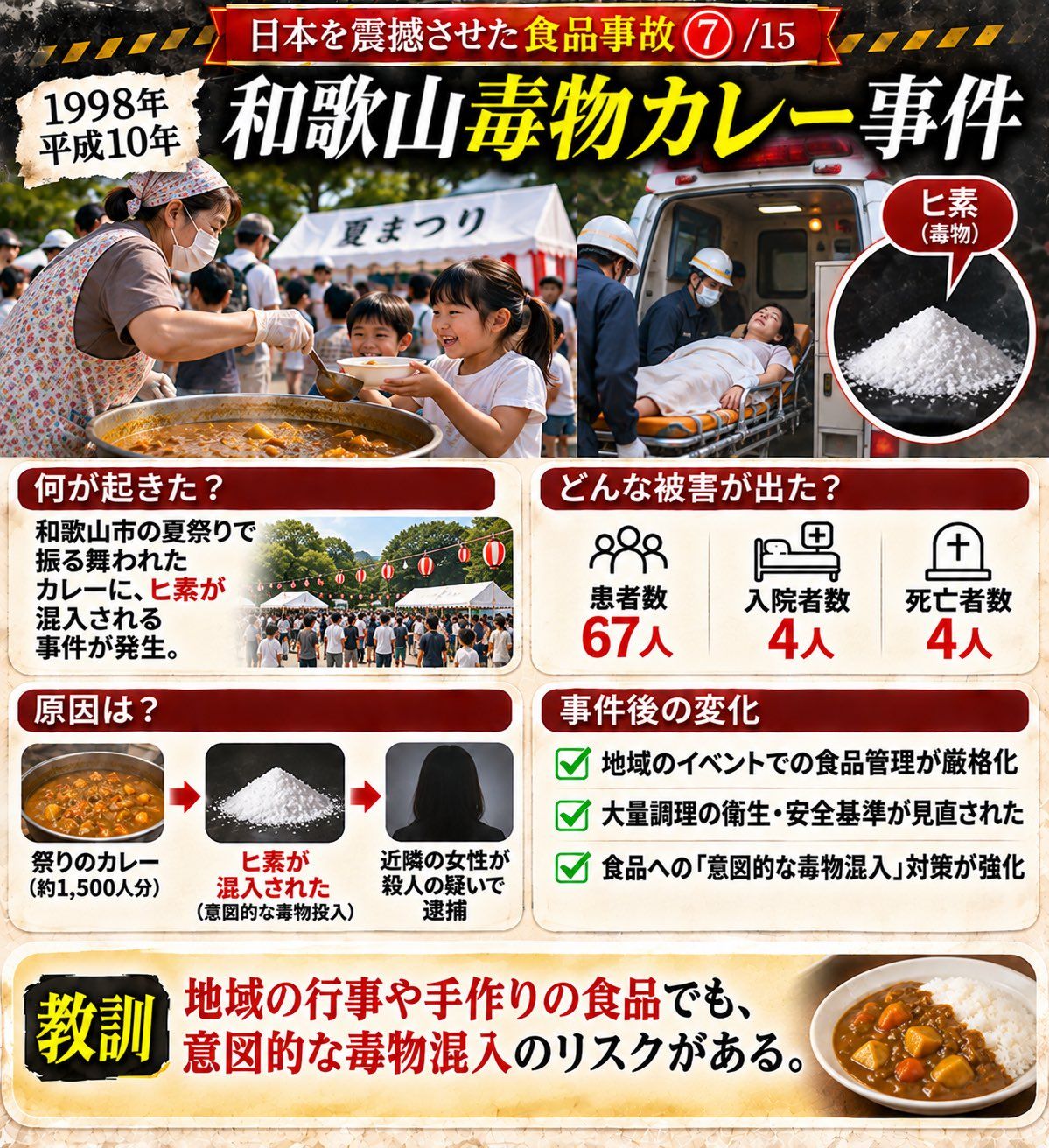
| 日本を震撼させた食品事故⑦/15 | Food incidents that shook Japan, no. 7 of 15 |
| 1998年 | 1998 |
| 平成10年 | Heisei 10 |
| 和歌山毒物カレー事件 | The Wakayama Poisoned Curry Incident |
| 夏まつり | Summer Festival |
| ヒ素 | Arsenic |
| (毒物) | (poison) |
| 何が起きた? | What happened? |
| 和歌山市の夏祭りで | At Wakayama City's summer festival |
| 振る舞われた | served out |
| カレーに、ヒ素が | into the curry, arsenic |
| 混入される | got mixed in |
| 事件が発生。 | an incident occurred. |
| どんな被害が出た? | How many were harmed? |
| 患者数 | Number poisoned |
| 67人 | 67 |
| 入院者数 | Number hospitalized |
| 4人 | 4 |
| 死亡者数 | Number of deaths |
| 4人 | 4 |
| 原因は? | What caused it? |
| 祭りのカレー | The festival curry |
| (約1,500人分) | (about 1,500 servings) |
| ヒ素が | Arsenic |
| 混入された | was mixed in |
| (意図的な毒物投入) | (deliberate poisoning) |
| 近隣の女性が | A woman from the neighborhood |
| 殺人の疑いで | on suspicion of murder |
| 逮捕 | arrested |
| 事件後の変化 | What changed afterward |
| 地域のイベントでの食品管理が厳格化 | Food handling at local events was made stricter |
| 大量調理の衛生・安全基準が見直された | Hygiene and safety standards for bulk cooking were revised |
| 食品への「意図的な毒物混入」対策が強化 | Measures against "deliberate poisoning" of food were strengthened |
| 教訓 | The lesson |
| 地域の行事や手作りの食品でも、 | Even at local events and with homemade food, |
| 意図的な毒物混入のリスクがある。 | there is a risk of deliberate poisoning. |
Fully AI-generated: this translation, culture and language-learning page was made automatically by AAAT (audio-auto-annotate-translate). AI wrote the transcription, readings, translation, word and culture notes, and spoke the voices; any of it may be wrong.
| Japanese | English |
|---|---|
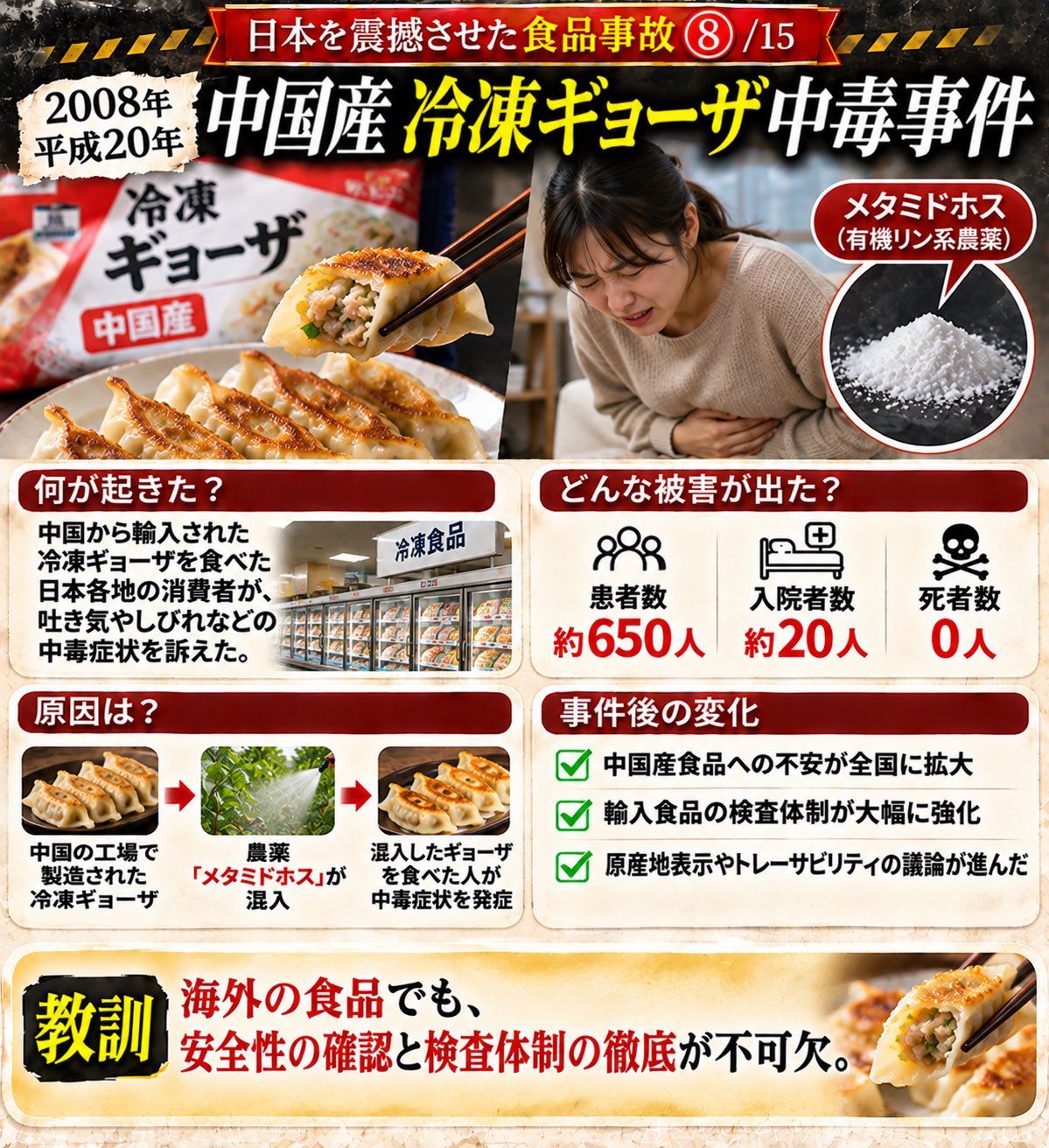
| 日本を震撼させた食品事故⑧/15 | Food incidents that shook Japan, No. 8 of 15 |
| 2008年 | 2008 |
| 平成20年 | Heisei 20 |
| 中国産 冷凍ギョーザ中毒事件 | The Chinese frozen gyoza poisoning incident |
| 冷凍 | Frozen |
| ギョーザ | gyoza |
| 中国産 | Made in China |
| メタミドホス | Methamidophos |
| (有機リン系農薬) | (an organophosphate pesticide) |
| 何が起きた? | What happened? |
| 中国から輸入された | imported from China |
| 冷凍ギョーザを食べた | who ate frozen gyoza |
| 日本各地の消費者が、 | consumers all over Japan |
| 吐き気やしびれなどの | nausea, numbness and other |
| 中毒症状を訴えた。 | reported symptoms of poisoning. |
| 冷凍食品 | Frozen food |
| どんな被害が出た? | What harm was done? |
| 患者数 | Taken ill |
| 約650人 | about 650 |
| 入院者数 | Hospitalized |
| 約20人 | about 20 |
| 死者数 | Deaths |
| 0人 | 0 |
| 原因は? | The cause? |
| 中国の工場で | at a factory in China |
| 製造された | made |
| 冷凍ギョーザ | frozen gyoza |
| 農薬 | The pesticide |
| 「メタミドホス」が | methamidophos |
| 混入 | got into them |
| 混入したギョーザ | the contaminated gyoza |
| を食べた人が | people who ate |
| 中毒症状を発症 | fell ill with poisoning |
| 事件後の変化 | What changed after the incident |
| 中国産食品への不安が全国に拡大 | Unease about Chinese-made food spread across the country |
| 輸入食品の検査体制が大幅に強化 | Inspection of imported food was greatly tightened |
| 原産地表示やトレーサビリティの議論が進んだ | Debate moved forward on country-of-origin labeling and traceability |
| 教訓 | The lesson |
| 海外の食品でも、 | Even with food from abroad, |
| 安全性の確認と検査体制の徹底が不可欠。 | checking its safety and thorough inspection are essential. |
Fully AI-generated: this translation, culture and language-learning page was made automatically by AAAT (audio-auto-annotate-translate). AI wrote the transcription, readings, translation, word and culture notes, and spoke the voices; any of it may be wrong.
| Japanese | English |
|---|---|
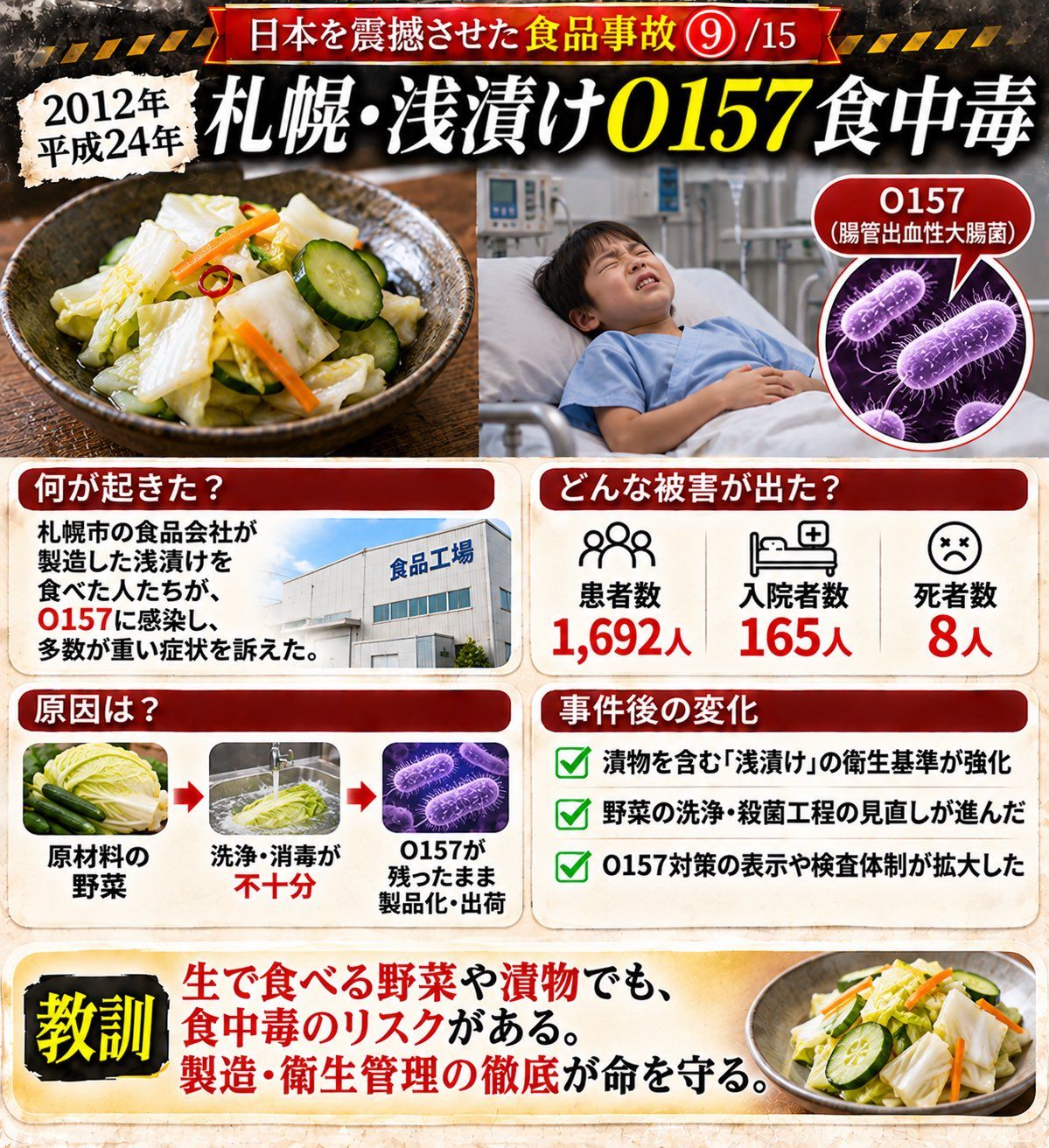
| 日本を震撼させた食品事故⑨/15 | Food disasters that shook Japan, No. 9 of 15 |
| 2012年 | 2012 |
| 平成24年 | Heisei 24 |
| 札幌・浅漬けO157食中毒 | The Sapporo asazuke O157 food poisoning |
| O157 | O157 |
| (腸管出血性大腸菌) | (enterohemorrhagic E. coli) |
| 何が起きた? | What happened? |
| 札幌市の食品会社が | A food company in Sapporo City |
| 製造した浅漬けを | made asazuke; |
| 食べた人たちが、 | people who ate it |
| O157に感染し、 | were infected with O157, |
| 多数が重い症状を訴えた。 | and many complained of serious symptoms. |
| 食品工場 | Food Factory |
| どんな被害が出た? | What harm was done? |
| 患者数 | Patients |
| 1,692人 | 1,692 |
| 入院者数 | Hospitalized |
| 165人 | 165 |
| 死者数 | Deaths |
| 8人 | 8 |
| 原因は? | What caused it? |
| 原材料の | Ingredient |
| 野菜 | vegetables |
| 洗浄・消毒が | Washing and disinfecting |
| 不十分 | were not enough |
| O157が | With O157 |
| 残ったまま | still on them, |
| 製品化・出荷 | they were made into products and shipped |
| 事件後の変化 | What changed afterward |
| 漬物を含む「浅漬け」の衛生基準が強化 | Hygiene standards for pickles, asazuke included, were tightened |
| 野菜の洗浄・殺菌工程の見直しが進んだ | The washing and sterilizing of vegetables was reviewed |
| O157対策の表示や検査体制が拡大した | Labeling about O157 and testing systems were expanded |
| 教訓 | The lesson |
| 生で食べる野菜や漬物でも、 | Even vegetables eaten raw and pickles |
| 食中毒のリスクがある。 | carry a risk of food poisoning. |
| 製造・衛生管理の徹底が命を守る。 | Thorough control of production and hygiene saves lives. |
Fully AI-generated: this translation, culture and language-learning page was made automatically by AAAT (audio-auto-annotate-translate). AI wrote the transcription, readings, translation, word and culture notes, and spoke the voices; any of it may be wrong.
| Japanese | English |
|---|---|
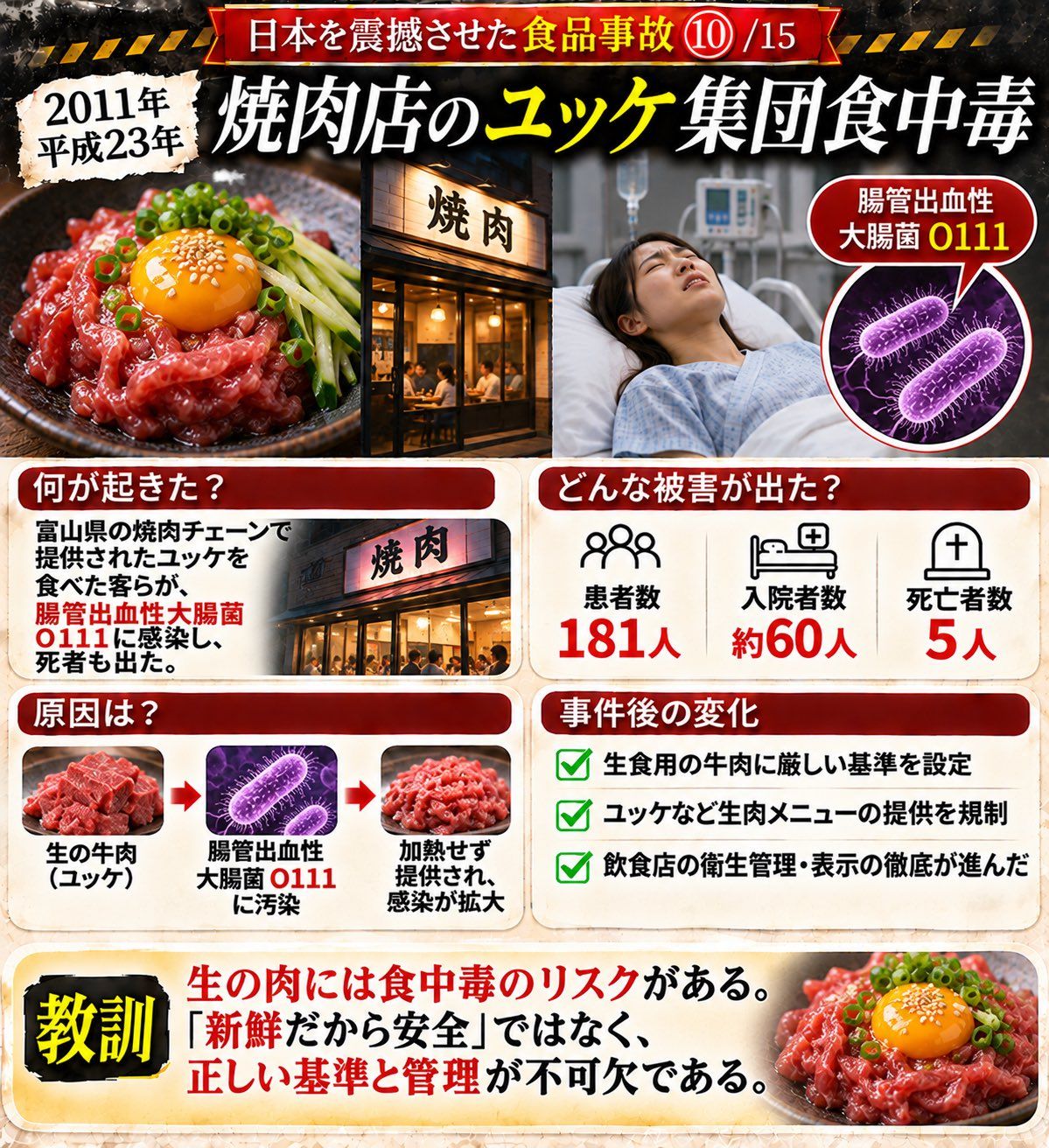
| 日本を震撼させた食品事故⑩/15 | Food disasters that shook Japan: No. 10 of 15 |
| 2011年 | 2011 |
| 平成23年 | Heisei 23 |
| 焼肉店のユッケ集団食中毒 | Mass yukhoe food poisoning at a yakiniku restaurant |
| 焼肉 | Yakiniku |
| 腸管出血性 | Enterohemorrhagic |
| 大腸菌 O111 | E. coli O111 |
| 何が起きた? | What happened? |
| 富山県の焼肉チェーンで | At a yakiniku chain in Toyama Prefecture, |
| 提供されたユッケを | the yukhoe it served |
| 食べた客らが、 | made the customers who ate it |
| 腸管出血性大腸菌 | ill with enterohemorrhagic E. coli |
| O111に感染し、 | O111, |
| 死者も出た。 | and some of them died. |
| 焼肉 | Yakiniku |
| どんな被害が出た? | How much harm was done? |
| 患者数 | Patients |
| 181人 | 181 |
| 入院者数 | Hospitalized |
| 約60人 | about 60 |
| 死亡者数 | Deaths |
| 5人 | 5 |
| 原因は? | The cause? |
| 生の牛肉 | Raw beef |
| (ユッケ) | (yukhoe) |
| 腸管出血性 | Enterohemorrhagic |
| 大腸菌 O111 | E. coli O111 |
| に汚染 | contaminated with |
| 加熱せず | Not cooked, |
| 提供され、 | served, |
| 感染が拡大 | and the infection spread |
| 事件後の変化 | Changes after the incident |
| 生食用の牛肉に厳しい基準を設定 | Strict standards set for beef to be eaten raw |
| ユッケなど生肉メニューの提供を規制 | Serving raw-meat dishes such as yukhoe restricted |
| 飲食店の衛生管理・表示の徹底が進んだ | Restaurants became strict about hygiene and labeling |
| 教訓 | The lesson |
| 生の肉には食中毒のリスクがある。 | Raw meat carries a risk of food poisoning. |
| 「新鮮だから安全」ではなく、 | Not "It's fresh, so it's safe": |
| 正しい基準と管理が不可欠である。 | the right standards and controls are essential. |
Fully AI-generated: this translation, culture and language-learning page was made automatically by AAAT (audio-auto-annotate-translate). AI wrote the transcription, readings, translation, word and culture notes, and spoke the voices; any of it may be wrong.
| Japanese | English |
|---|---|
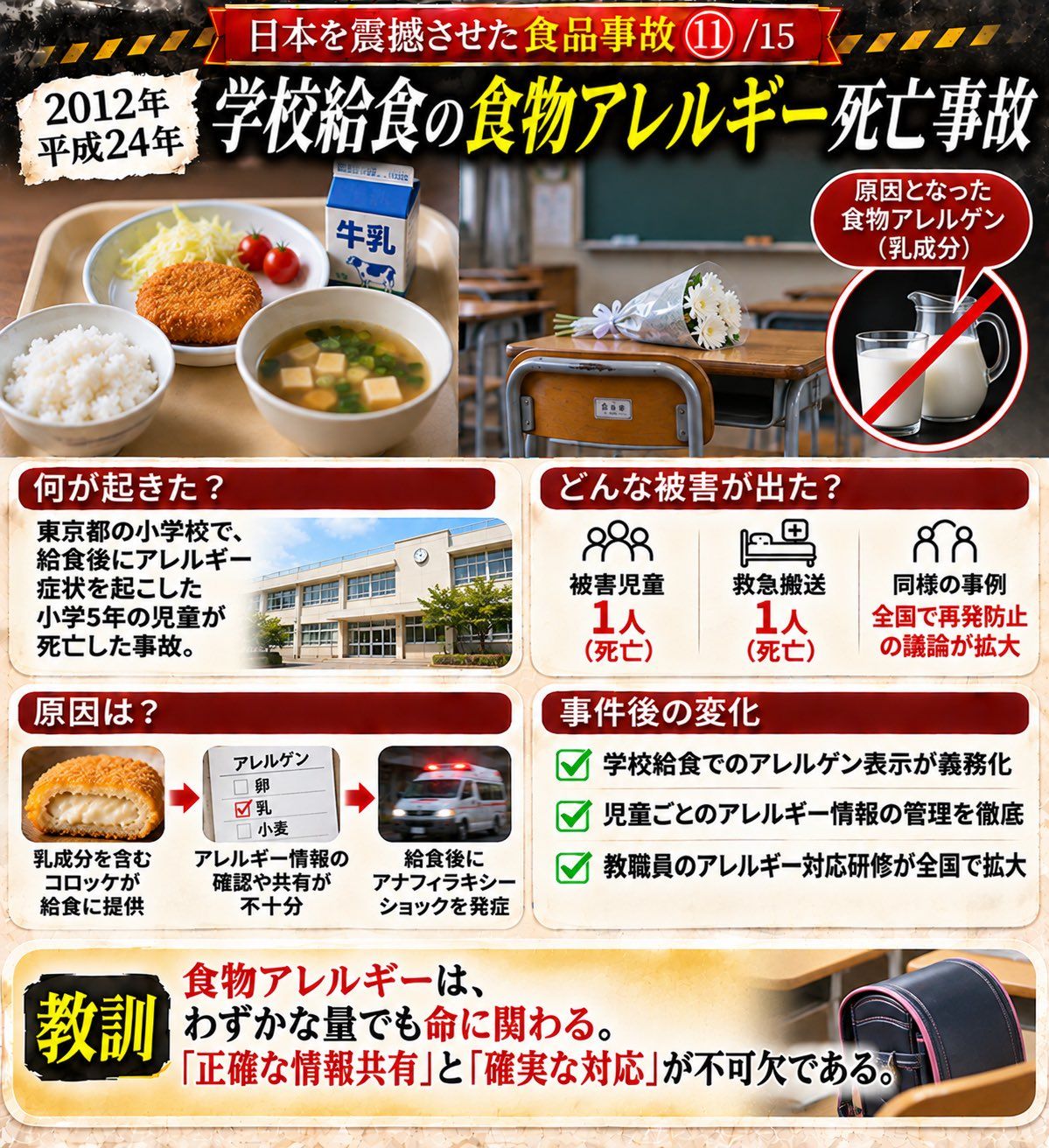
| 日本を震撼させた食品事故⑪/15 | Food incidents that shook Japan: No. 11 of 15 |
| 2012年 | 2012 |
| 平成24年 | Heisei 24 |
| 学校給食の食物アレルギー死亡事故 | Fatal food-allergy accident in a school lunch |
| 原因となった | That caused it: |
| 食物アレルゲン | the food allergen |
| (乳成分) | (milk ingredients) |
| 牛乳 | Milk |
| 何が起きた? | What happened? |
| 東京都の小学校で、 | At an elementary school in Tokyo, |
| 給食後にアレルギー | after school lunch, allergic |
| 症状を起こした | symptoms developed in |
| 小学5年の児童が | a fifth-grade pupil, who |
| 死亡した事故。 | died: that was the accident. |
| どんな被害が出た? | What harm was done? |
| 被害児童 | Child victims |
| 1人 | One |
| (死亡) | (died) |
| 救急搬送 | Rushed to hospital |
| 1人 | One |
| (死亡) | (died) |
| 同様の事例 | Similar cases |
| 全国で再発防止 | Nationwide, the debate on preventing a recurrence |
| の議論が拡大 | spread |
| 原因は? | What caused it? |
| 乳成分を含む | Containing milk ingredients, |
| コロッケが | a croquette |
| 給食に提供 | was served at lunch |
| アレルゲン | Allergens |
| 卵 | Egg |
| 乳 | Milk |
| 小麦 | Wheat |
| アレルギー情報の | Allergy information: |
| 確認や共有が | checking and sharing it |
| 不十分 | was inadequate |
| 給食後に | After lunch, |
| アナフィラキシー | anaphylactic |
| ショックを発症 | shock set in |
| 事件後の変化 | Changes after the incident |
| 学校給食でのアレルゲン表示が義務化 | Allergen labeling in school lunches made mandatory |
| 児童ごとのアレルギー情報の管理を徹底 | Each pupil's allergy information strictly managed |
| 教職員のアレルギー対応研修が全国で拡大 | Allergy-response training for school staff spread nationwide |
| 教訓 | The lesson |
| 食物アレルギーは、 | Food allergies |
| わずかな量でも命に関わる。 | can kill, even in tiny amounts. |
| 「正確な情報共有」と「確実な対応」が不可欠である。 | "Accurate information sharing" and "a reliable response" are essential. |
Fully AI-generated: this translation, culture and language-learning page was made automatically by AAAT (audio-auto-annotate-translate). AI wrote the transcription, readings, translation, word and culture notes, and spoke the voices; any of it may be wrong.
| Japanese | English |
|---|---|
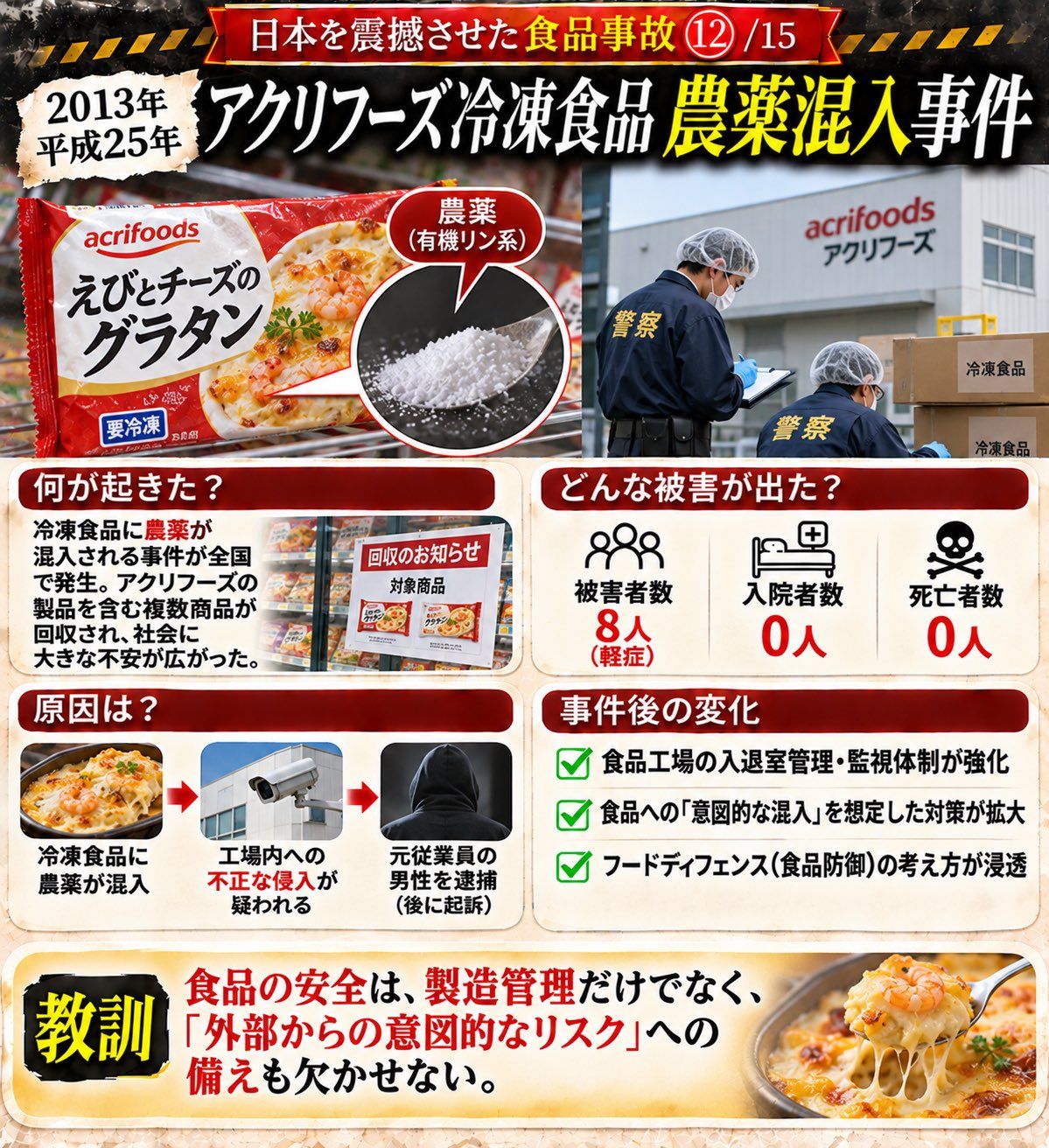
| 日本を震撼させた食品事故⑫/15 | Food incidents that shook Japan, No. 12 of 15 |
| 2013年 | 2013 |
| 平成25年 | Heisei 25 |
| アクリフーズ冷凍食品農薬混入事件 | The Aqli Foods frozen food pesticide contamination case |
| acrifoods | acrifoods |
| えびとチーズの | Shrimp and cheese |
| グラタン | gratin |
| 要冷凍 | Keep frozen |
| 農薬 | Pesticide |
| (有機リン系) | (organophosphate) |
| acrifoods | acrifoods |
| アクリフーズ | Aqli Foods |
| 警察 | Police |
| 冷凍食品 | Frozen food |
| 警察 | Police |
| 冷凍食品 | Frozen food |
| 何が起きた? | What happened? |
| 冷凍食品に農薬が | Pesticide in frozen foods: |
| 混入される事件が全国 | contamination cases, across the country, |
| で発生。アクリフーズの | broke out. Aqli Foods' |
| 製品を含む複数商品が | products among them, several items |
| 回収され、社会に | were recalled, and through society |
| 大きな不安が広がった。 | great unease spread. |
| 回収のお知らせ | Recall notice |
| 対象商品 | Affected products |
| どんな被害が出た? | What harm was done? |
| 被害者数 | Victims |
| 8人 | 8 people |
| (軽症) | (mild cases) |
| 入院者数 | Hospitalized |
| 0人 | 0 people |
| 死亡者数 | Deaths |
| 0人 | 0 people |
| 原因は? | The cause? |
| 冷凍食品に | Into frozen foods, |
| 農薬が混入 | pesticide was mixed in |
| 工場内への | Into the plant, |
| 不正な侵入が | an unauthorized break-in |
| 疑われる | is suspected |
| 元従業員の | A former employee, |
| 男性を逮捕 | a man, was arrested |
| (後に起訴) | (later indicted) |
| 事件後の変化 | Changes after the incident |
| 食品工場の入退室管理・監視体制が強化 | Food factories tightened entry-and-exit control and monitoring |
| 食品への「意図的な混入」を想定した対策が拡大 | Measures against "deliberate contamination" of food were expanded |
| フードディフェンス(食品防御)の考え方が浸透 | The idea of food defense took hold |
| 教訓 | Lesson |
| 食品の安全は、製造管理だけでなく、 | For food safety, beyond production control, |
| 「外部からの意図的なリスク」への | preparing for "deliberate risks from outside" |
| 備えも欠かせない。 | is also indispensable. |
Fully AI-generated: this translation, culture and language-learning page was made automatically by AAAT (audio-auto-annotate-translate). AI wrote the transcription, readings, translation, word and culture notes, and spoke the voices; any of it may be wrong.
| Japanese | English |
|---|---|
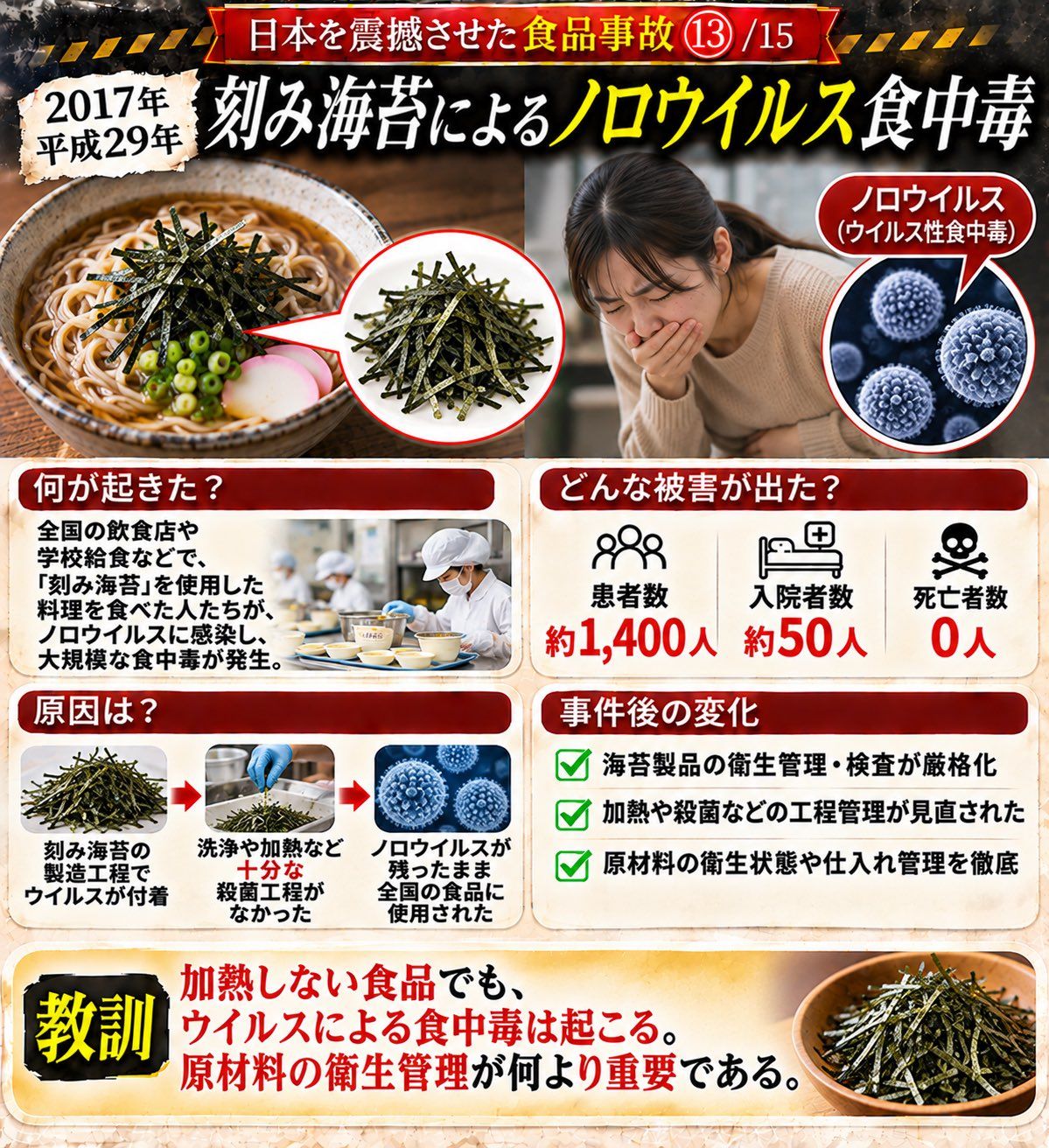
| 日本を震撼させた食品事故⑬/15 | Food accidents that shook Japan, No. 13 of 15 |
| 2017年 | 2017 |
| 平成29年 | Heisei 29 |
| 刻み海苔によるノロウイルス食中毒 | Norovirus food poisoning from shredded nori |
| ノロウイルス | Norovirus |
| (ウイルス性食中毒) | (viral food poisoning) |
| 何が起きた? | What happened? |
| 全国の飲食店や | At restaurants all over the country |
| 学校給食などで、 | and in school lunches and elsewhere, |
| 「刻み海苔」を使用した | made with "shredded nori" |
| 料理を食べた人たちが、 | the people who ate the dishes |
| ノロウイルスに感染し、 | caught norovirus, |
| 大規模な食中毒が発生。 | and food poisoning broke out on a huge scale. |
| どんな被害が出た? | What harm did it do? |
| 患者数 | Number taken ill |
| 約1,400人 | about 1,400 people |
| 入院者数 | Number hospitalized |
| 約50人 | about 50 people |
| 死亡者数 | Number of deaths |
| 0人 | none |
| 原因は? | The cause? |
| 刻み海苔の | While the shredded nori |
| 製造工程で | was being made, |
| ウイルスが付着 | the virus got onto it |
| 洗浄や加熱など | such as washing or heating |
| 十分な | enough |
| 殺菌工程が | germ-killing step |
| なかった | there was none |
| ノロウイルスが | The norovirus |
| 残ったまま | still on it |
| 全国の食品に | in food across the country |
| 使用された | it was used |
| 事件後の変化 | What changed afterward |
| 海苔製品の衛生管理・検査が厳格化 | Hygiene control and inspection of nori products made stricter |
| 加熱や殺菌などの工程管理が見直された | Control of steps such as heating and sterilizing reviewed |
| 原材料の衛生状態や仕入れ管理を徹底 | Hygiene of raw ingredients and control of purchasing strictly enforced |
| 教訓 | The lesson |
| 加熱しない食品でも、 | Even with food that isn't cooked, |
| ウイルスによる食中毒は起こる。 | viral food poisoning can happen. |
| 原材料の衛生管理が何より重要である。 | Hygiene control of raw ingredients matters above all. |
Fully AI-generated: this translation, culture and language-learning page was made automatically by AAAT (audio-auto-annotate-translate). AI wrote the transcription, readings, translation, word and culture notes, and spoke the voices; any of it may be wrong.
| Japanese | English |
|---|---|
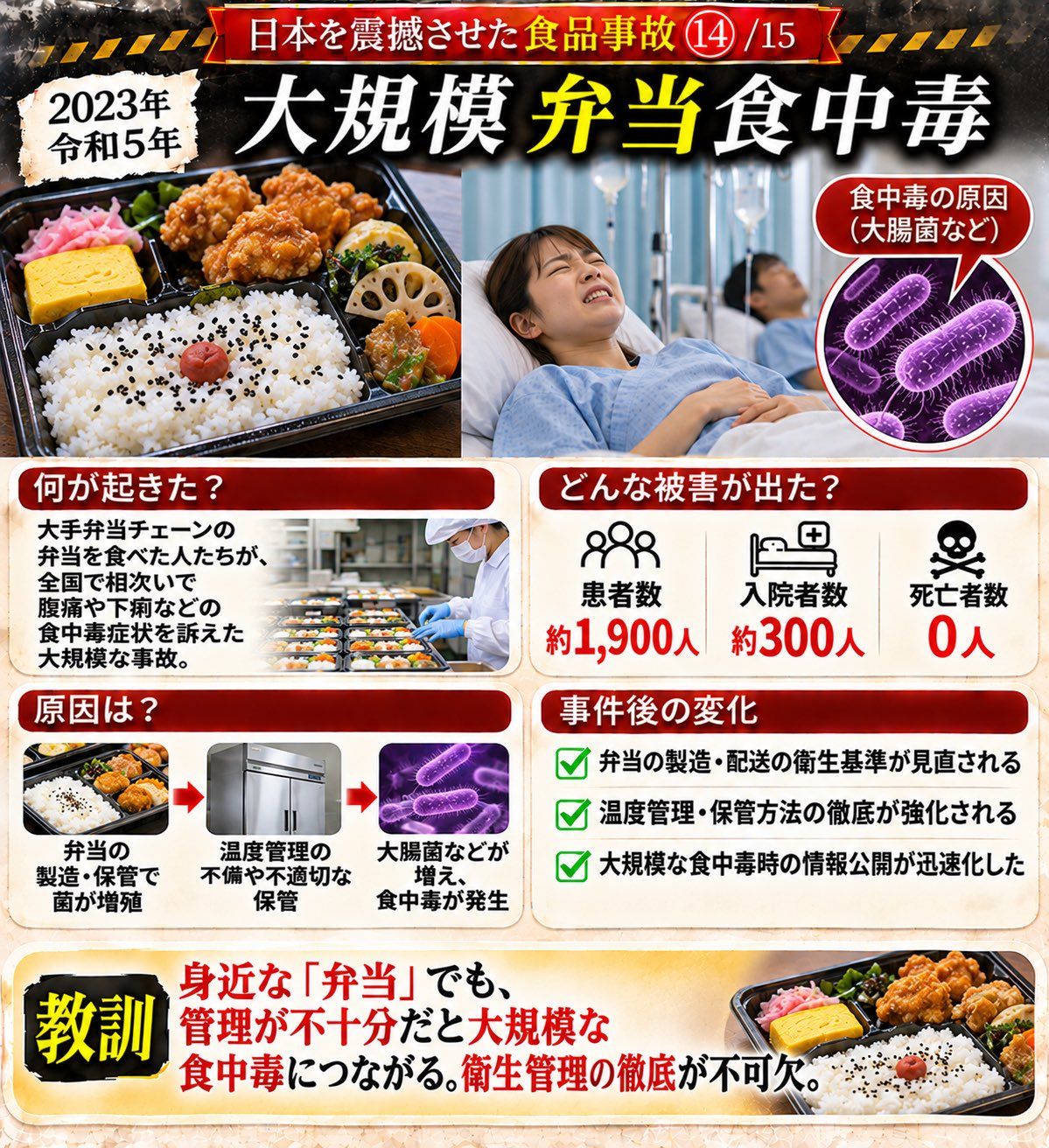
| 日本を震撼させた食品事故⑭/15 | Food disasters that shook Japan: No. 14 of 15 |
| 2023年 | 2023 |
| 令和5年 | Reiwa 5 |
| 大規模 弁当食中毒 | Mass food poisoning from bento |
| 食中毒の原因 | Cause of the food poisoning |
| (大腸菌など) | (E. coli and the like) |
| 何が起きた? | What happened? |
| 大手弁当チェーンの | A major bento chain's |
| 弁当を食べた人たちが、 | bento: the people who ate it, |
| 全国で相次いで | one after another, all over the country, |
| 腹痛や下痢などの | with stomach pain, diarrhea and other |
| 食中毒症状を訴えた | food-poisoning symptoms, reported falling ill: |
| 大規模な事故。 | a large-scale incident. |
| どんな被害が出た? | What was the toll? |
| 患者数 | Patients |
| 約1,900人 | About 1,900 |
| 入院者数 | Hospitalized |
| 約300人 | About 300 |
| 死亡者数 | Deaths |
| 0人 | 0 |
| 原因は? | What caused it? |
| 弁当の | In the bento's |
| 製造・保管で | making and storage, |
| 菌が増殖 | bacteria multiply |
| 温度管理の | Lapses in temperature control |
| 不備や不適切な | or improper |
| 保管 | storage |
| 大腸菌などが | E. coli and other bacteria |
| 増え、 | multiply, |
| 食中毒が発生 | and food poisoning breaks out |
| 事件後の変化 | What changed afterward |
| 弁当の製造・配送の衛生基準が見直される | Hygiene standards for making and delivering bento are reviewed |
| 温度管理・保管方法の徹底が強化される | Strict temperature control and storage are enforced more firmly |
| 大規模な食中毒時の情報公開が迅速化した | Information about large food-poisoning outbreaks came to be released faster |
| 教訓 | Lesson |
| 身近な「弁当」でも、 | Even everyday bento, |
| 管理が不十分だと大規模な | if poorly handled, can lead to large-scale |
| 食中毒につながる。衛生管理の徹底が不可欠。 | food poisoning. Strict hygiene control is essential. |
Fully AI-generated: this translation, culture and language-learning page was made automatically by AAAT (audio-auto-annotate-translate). AI wrote the transcription, readings, translation, word and culture notes, and spoke the voices; any of it may be wrong.
| Japanese | English |
|---|---|
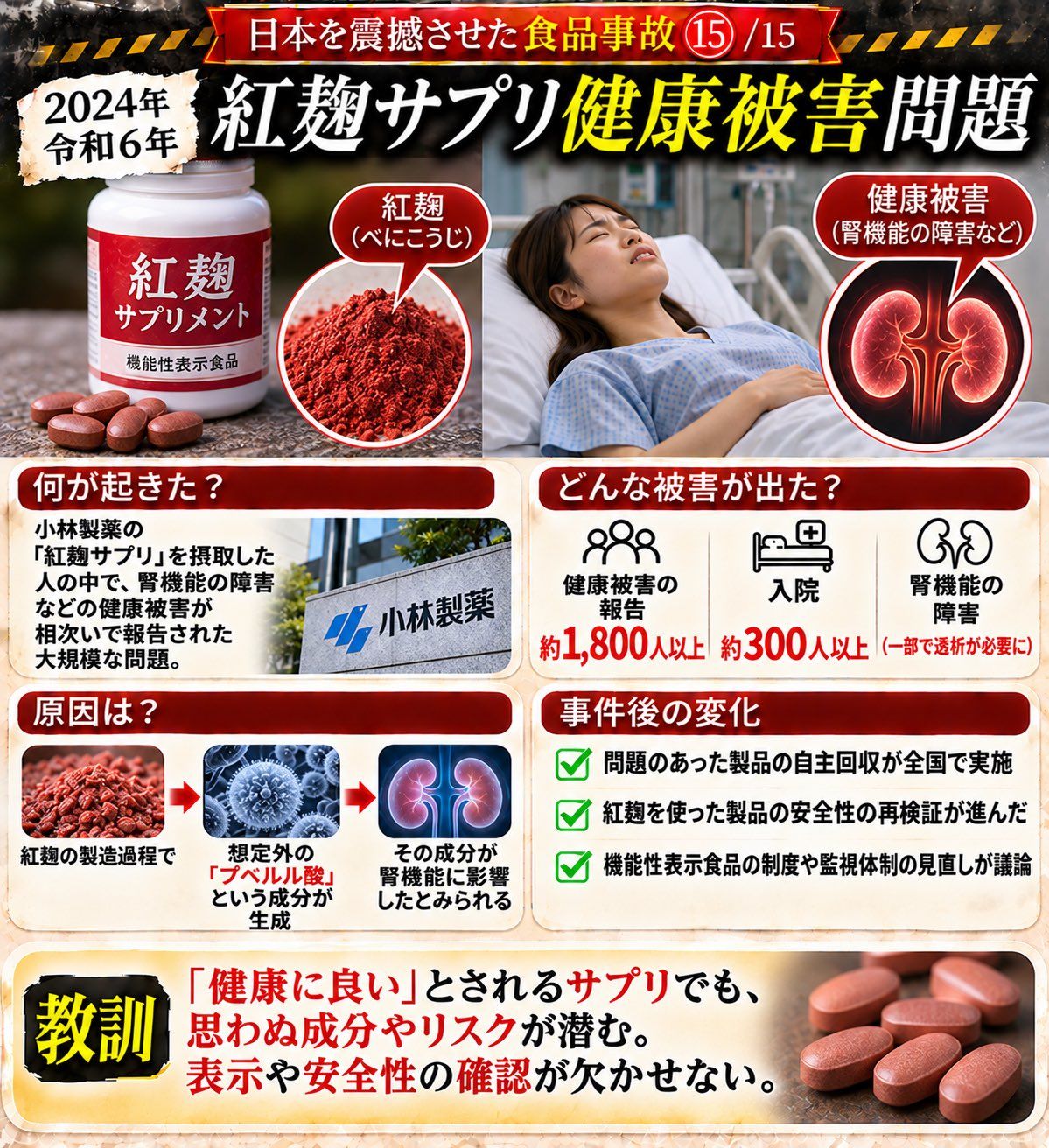
| 日本を震撼させた食品事故⑮/15 | Food incidents that shook Japan, No. 15 of 15 |
| 2024年 | 2024 |
| 令和6年 | Reiwa 6 (2024) |
| 紅麹サプリ健康被害問題 | The red yeast rice supplement health damage scandal |
| 紅麹 | Red Yeast Rice |
| サプリメント | Supplement |
| 機能性表示食品 | Food with Function Claims |
| 紅麹 | Red yeast rice |
| (べにこうじ) | (beni-kōji) |
| 健康被害 | Health damage |
| (腎機能の障害など) | (kidney damage and more) |
| 何が起きた? | What happened? |
| 小林製薬の | Kobayashi Pharmaceutical's |
| 「紅麹サプリ」を摂取した | who took the "Beni-koji Supplement" |
| 人の中で、腎機能の障害 | among the people who did, kidney damage |
| などの健康被害が | and other health harm |
| 相次いで報告された | was reported one case after another |
| 大規模な問題。 | a large-scale problem. |
| 小林製薬 | Kobayashi Pharmaceutical |
| どんな被害が出た? | What harm was done? |
| 健康被害の | of health damage |
| 報告 | Reports |
| 約1,800人以上 | about 1,800 people or more |
| 入院 | Hospitalized |
| 約300人以上 | about 300 people or more |
| 腎機能の | Kidney |
| 障害 | damage |
| (一部で透析が必要に) | (some needed dialysis) |
| 原因は? | The cause? |
| 紅麹の製造過程で | While the red yeast rice was being made, |
| 想定外の | an unexpected |
| 「プベルル酸」 | "puberulic acid" |
| という成分が | substance called |
| 生成 | was produced |
| その成分が | that substance |
| 腎機能に影響 | affected kidney function |
| したとみられる | is believed to have had |
| 事件後の変化 | What changed afterward |
| 問題のあった製品の自主回収が全国で実施 | The products with the problem were voluntarily recalled nationwide. |
| 紅麹を使った製品の安全性の再検証が進んだ | Safety re-checks of products made with red yeast rice went ahead. |
| 機能性表示食品の制度や監視体制の見直しが議論 | Reform of the Foods with Function Claims system and its oversight was debated. |
| 教訓 | Lesson |
| 「健康に良い」とされるサプリでも、 | Even supplements said to be "good for your health" |
| 思わぬ成分やリスクが潜む。 | can hide unexpected ingredients and risks. |
| 表示や安全性の確認が欠かせない。 | Checking labels and safety is a must. |
Original post: @waka_skincare on X